
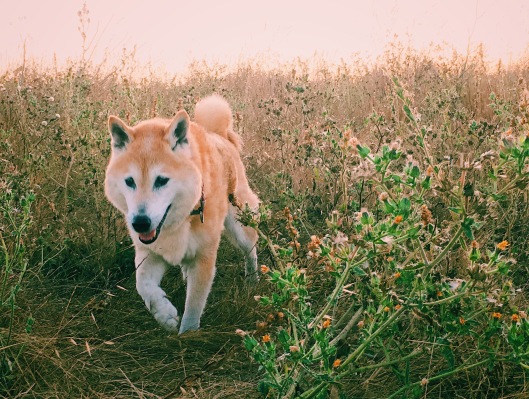
Bowdu 寶肚, the Precious Tummy
a.k.a. Doobs
Jan 20, 2005 – August 17, 2020
The Original Bow of The House of Two Bows 雙寶之屋,
debuted on April 2, 2005
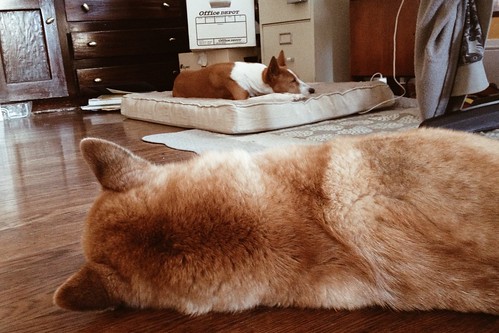
From bustling Taipei streets to our cozy Berkeley bungalow, through grad school and jobs and friendships and relationships, home with Bowdu was the most constant presence I’d known for the past 15 and a half years. He had been dealing with similar renal issues as Bowpi, but his mind was what failed him in the end. His canine cognitive dysfunction had been evident for a couple years already, though mostly abated with the pandemic and me being home all the time. But as soon as Bowpi was gone, he just lost it. It’s like I could feel his organs shutting down, particularly his precious heart-mind.
At the emergency vet where Bowpi was laid to rest, ambient thunderstorm sounds played in the room. On Bowdu’s last full day, we got a whole morning of real thunder, lightning, and summer rain — a rarity for Bay Area weather. It was a portentous beginning to our amazing last day together, spent alive in our senses and immersed in love. The heat and humidity had mostly subsided by the afternoon when we shifted out to the backyard. We cuddled in the shade, felt the cooling air, listened to birds and the neighborhood, watched the sky change colors as evening fog swirled in layers overhead. When the solar garden lights kicked on, we shared dinner outside — salt and pepper fish with lentil soup for me, the same fish minus pepper plus congee for him. We then camped down on a blanket until one a.m., when the party returned indoors for one last, failed attempt at sleeping calmly through the night.
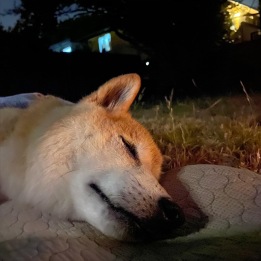
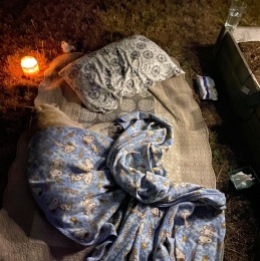
He lived fiercely, yet passed so gently, yielding completely to the home euthanasia vet who came the next morning. Though I ached to keep him with me just a little longer, he told me clearly that he was ready to go.
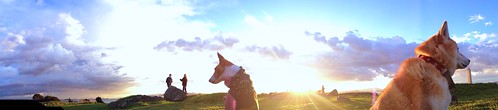
Now, one grief-stricken week later, I am able to marvel at the timing, in retrospect. One day earlier, our backyard campout would have been chased indoors by inclement weather. Two days later, we’d be struggling to breathe through California wildfire smoke. I keep reflecting on the strange irony that this terrible pandemic gave both of my Bows pretty perfect deaths, after all. Because I didn’t have to miss Bowpi’s seizures and come home wondering what had happened, or worry about being somewhere else when she needed me, or wait in crowded offices while we were both in distress. And though lots of vets have contact-free policies now, the emergency vet was still able to let me go in to a very comfortable, private room and take all the time I needed with Bowpi. The home euthanasia vet let me stage Bowdu’s final moments in a peaceful, golden spot where the sun came shining down on his face, both of us facing westward with my masked face buried in his neckfur, spooning him in his final moments. The vet stayed outdoors, I remained inside, Bowdu laid on a dog bed at the threshold of the back door until his breath just faded into vapor…
It is not the worst injustice to have a beloved pet pass while everyone is under lockdown. It is still extremely painful to lose both Bows within a single month. In a year full of unwelcome changes, I can only hope these two will hurt the most.

Until we find each other again…

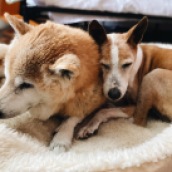
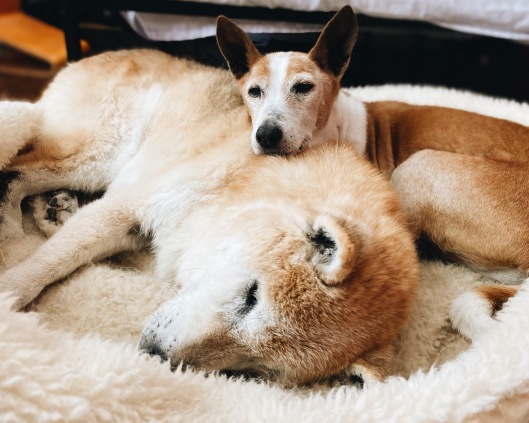
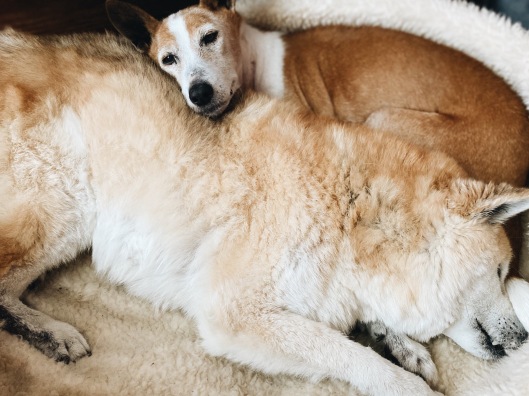

 The House of Two Bows 雙寶之屋